

Weekly Economic Update 05-01-26: Case-Shiller Home Price Index; Durable Goods; Building Permits & Starts; First Quarter GDP; Personal Income & Spending; and PCE Inflation
The Fed held rates constant this week and their preferred measure of inflation rose to more than 3%. Rate cuts are off the table, and the next move will likely be up.
The views and opinions expressed in this post are solely those of the author and do not necessarily reflect the views of the Georgia Institute of Technology or the Georgia Board of Regents.
Last week, there was only one piece of economic data released. That is rare, and when the calendar happens to fall that way, it is nice to have a “lite” week where I don’t have to write a lot. However, the flip side is that I pay for it the following week when the dam breaks, and there are multiple data releases almost every day. To make matters worse, I spent three days this week at the GEDA Spring Workshop in Savannah, and all the networking, activities, sessions, and dinners kept me away from my computer until late every evening. So this week’s update may lack some of my usual commentary.
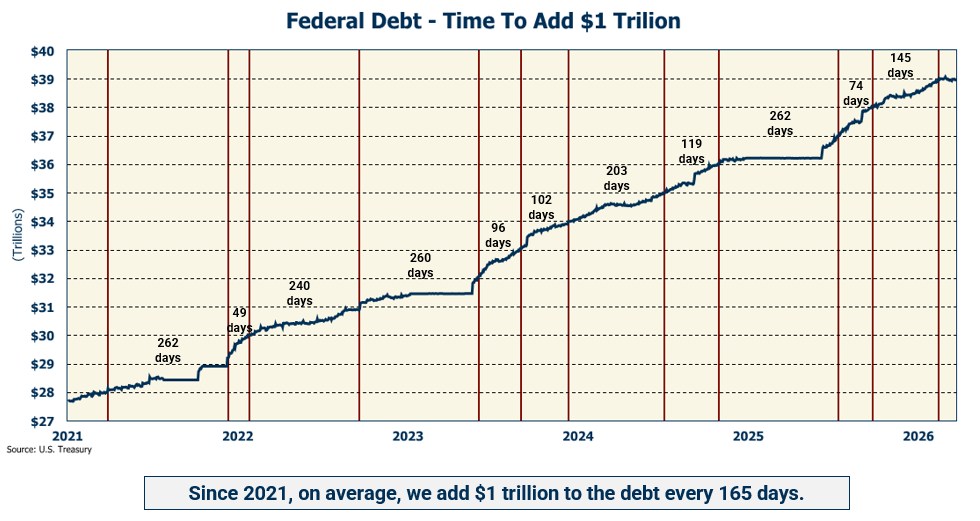
But before we get to the data, there is one oversight I need to correct. I failed to mention several weeks ago that, on March 17th, the U.S. government officially crossed the $39 trillion debt level. It took just 145 days to move from $38 trillion to $39 trillion. Since 2021, on average, we add $1 trillion to the debt every 165 days. (This last trillion was slightly quicker.)
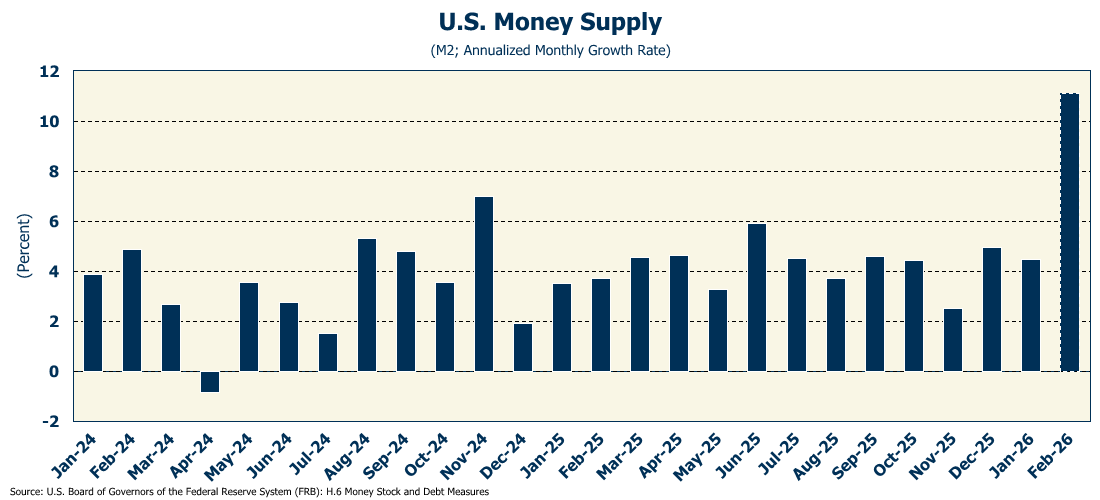
Here is another interesting fact…in February, the money supply (M2) grew at an annualized rate of 11.1%. That is the fastest rate of expansion since August 2021. And one year later, in August of 2022, inflation was running 8.2%.
As Milton Friedman said…
"Inflation is always and everywhere a monetary phenomenon, in the sense that it is and can be produced ONLY by a more rapid increase in the quantity of money than in output."
It really is that simple. Inflation is when the money supply grows faster than real output. The money supply is growing at 11.1% on an annual rate. GDP in the fourth quarter grew 0.5% on an annual rate, and as we found out this week, it grew 2.0% in the first quarter.
Keep reading with a 7-day free trial
Subscribe to Alfie Meek's Weekly Economic Digest and Commentary to keep reading this post and get 7 days of free access to the full post archives.