

Weekly Economic Update 08-07-26: ISM Manufacturing; Factory Orders; ISM Services; JOLTS; and July Employment
The bond market doesn't believe Walsh is serious about inflation. Neither do I.
The views and opinions expressed in this post are solely those of the author and do not necessarily reflect the views of the Georgia Institute of Technology or the Georgia Board of Regents.
I mentioned this briefly in my introduction last week, but I wanted to discuss it a little more, and since there wasn’t a lot of other news (beyond our on-again, off-again relationship with Iran), I thought I would pick it up again.
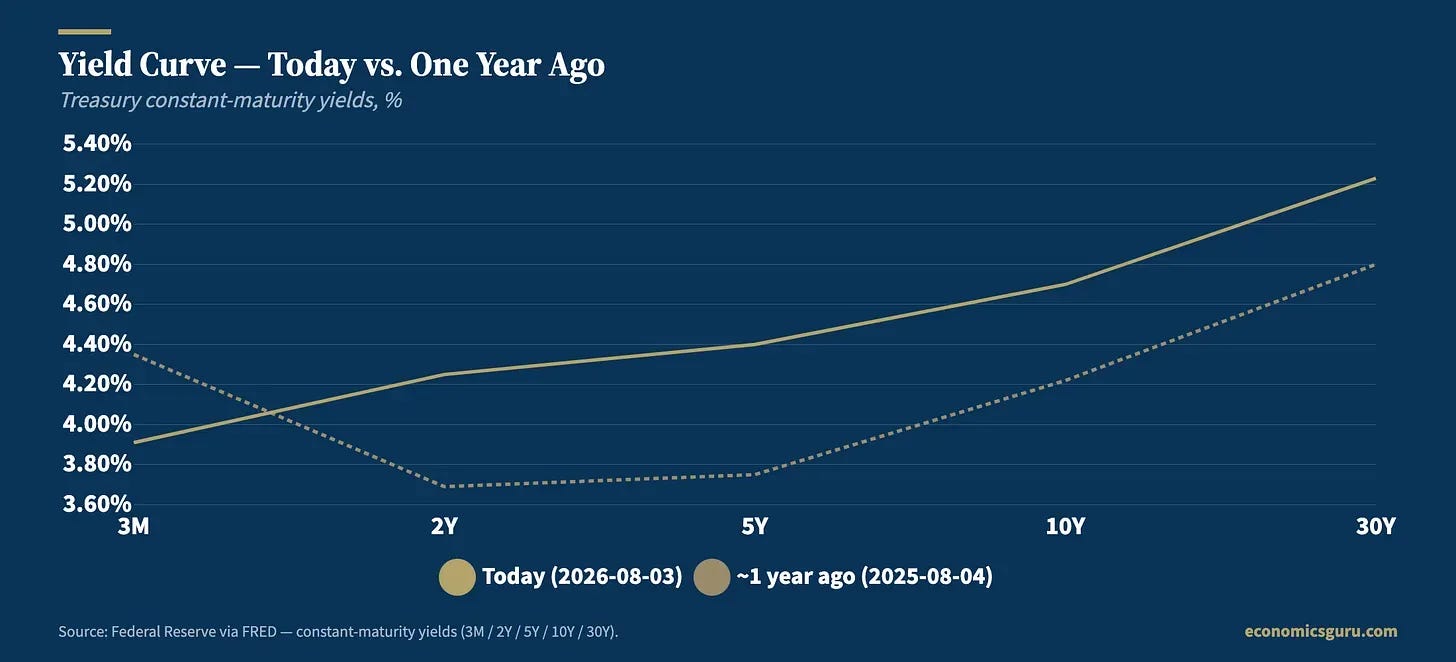
It has become apparent that the Fed isn’t serious about inflation. And it appears that the bond market is with me on this. On July 31st, the 30-year Treasury yield touched 5.27%. You have to go all the way back to July 6, 2007 (the housing/financial crisis) to find it higher. That was two days after Fed Chair Warsh stood at the podium and told us the Fed “will deliver price stability” and “will not hesitate to act.”
The bond market listened to his comments, and then sold the long bond.
But here is what is interesting. This doesn’t appear to be an inflation-expectations story. I mean, I think it is an inflation issue, but apparently, no one else does. The 10-year “breakeven” — the gap between a regular Treasury and an inflation-protected one, or what the market thinks CPI averages over the next decade — sits at 2.22%. A year ago it was 2.36%.
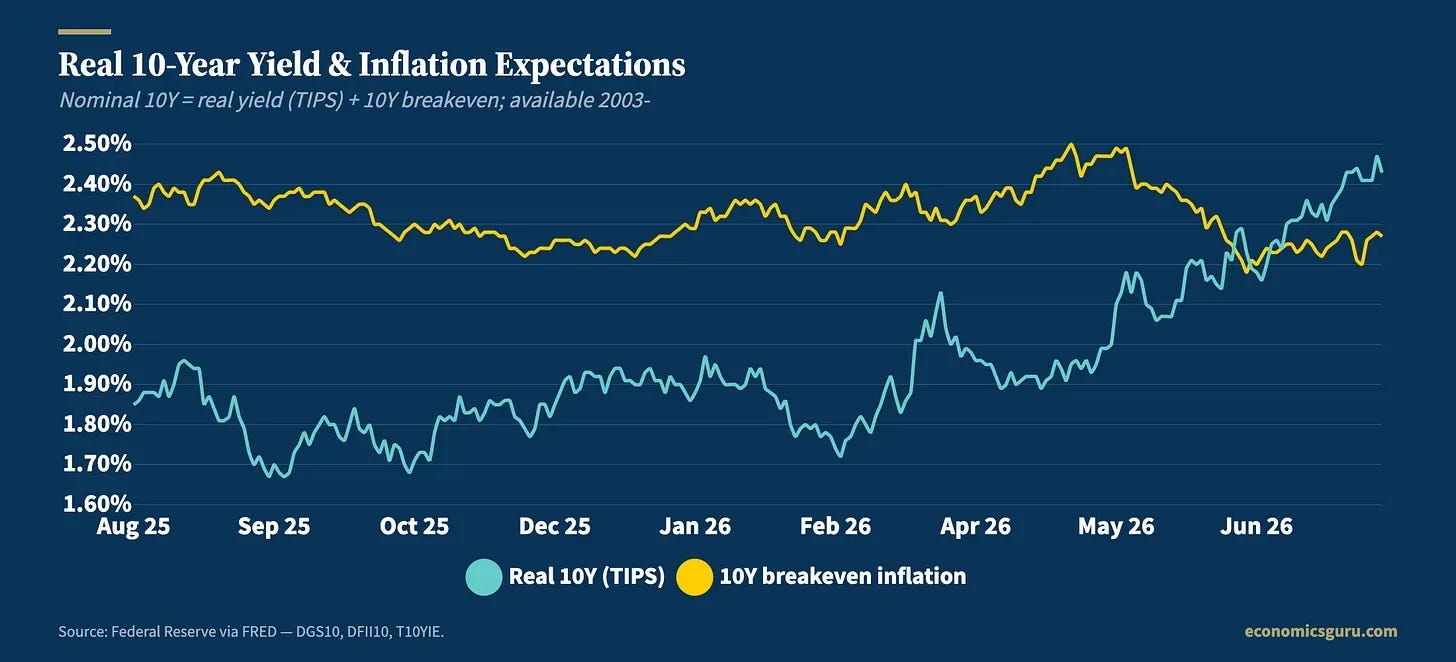
Nobody out there is forecasting a rerun of the 1970s. Again, I think this looks a lot like the 1970s, but apparently I am alone in that.
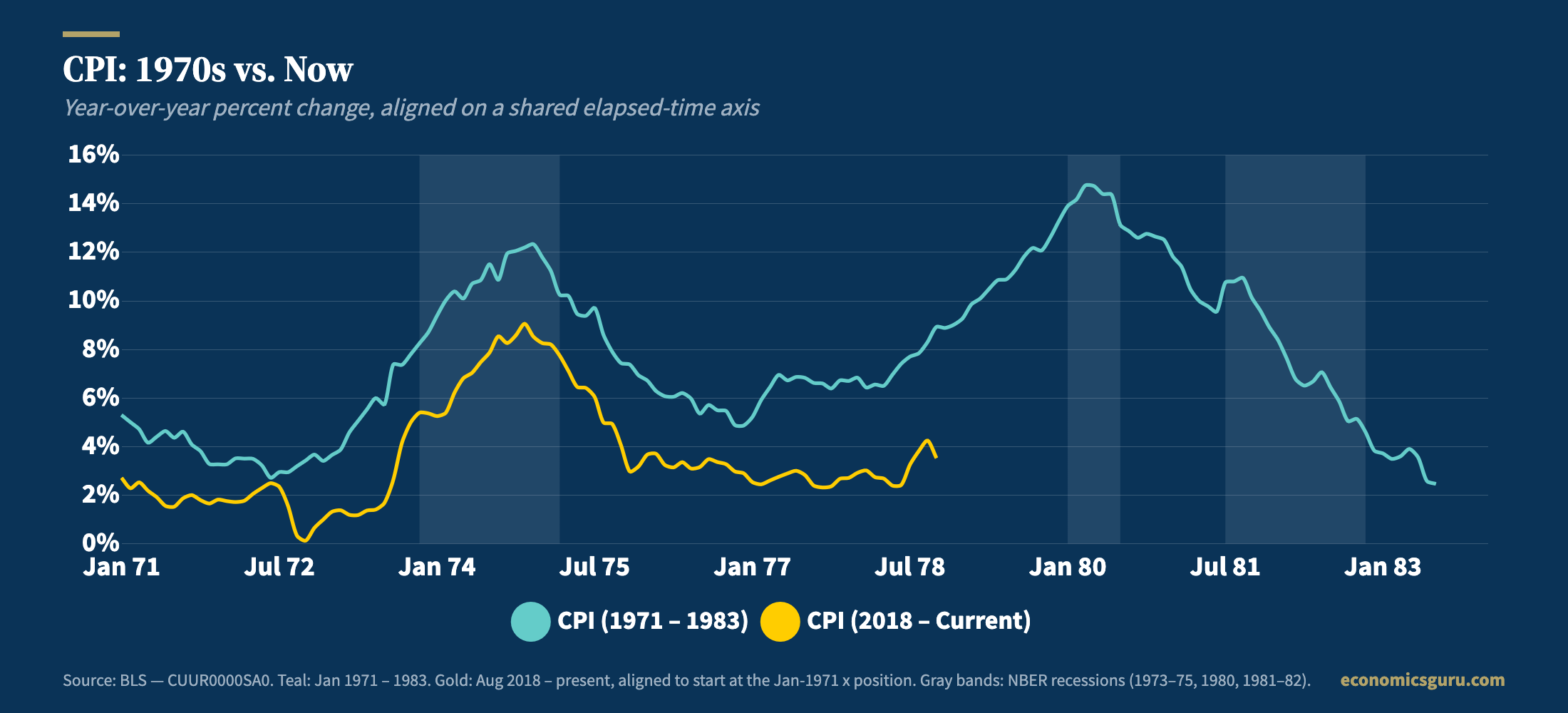
So if it isn’t inflation expectations, what has moved is the term premium: the extra yield investors demand simply for agreeing to be locked up for ten years. According to the New York Fed, that is 0.87%, up from 0.53% a year ago. That is the highest since April 2011.
So the market isn’t saying “we expect more inflation.” It’s saying “we have no idea what you people are going to do, and we’d like to be paid for finding out.”
Warsh is the author of this uncertainty. When asked whether rate increases were the remedy, he said rates “could well be part of that solution, but I wouldn’t say it’s in isolation.” Asked about the 2% target, he confirmed it — and then offered that after January, “who knows.”
Understand what that means. The number anchoring every long-dated fixed-income contract in this country is, by the chairman’s own words, up for discussion.
The Fed cut 75 basis points between September and December of last year, and the funds rate hasn’t moved since. Over that same stretch, the 30-year has gone UP about 40 basis points. Core PCE is running 3.3% — not 2/0%, and certainly not falling.
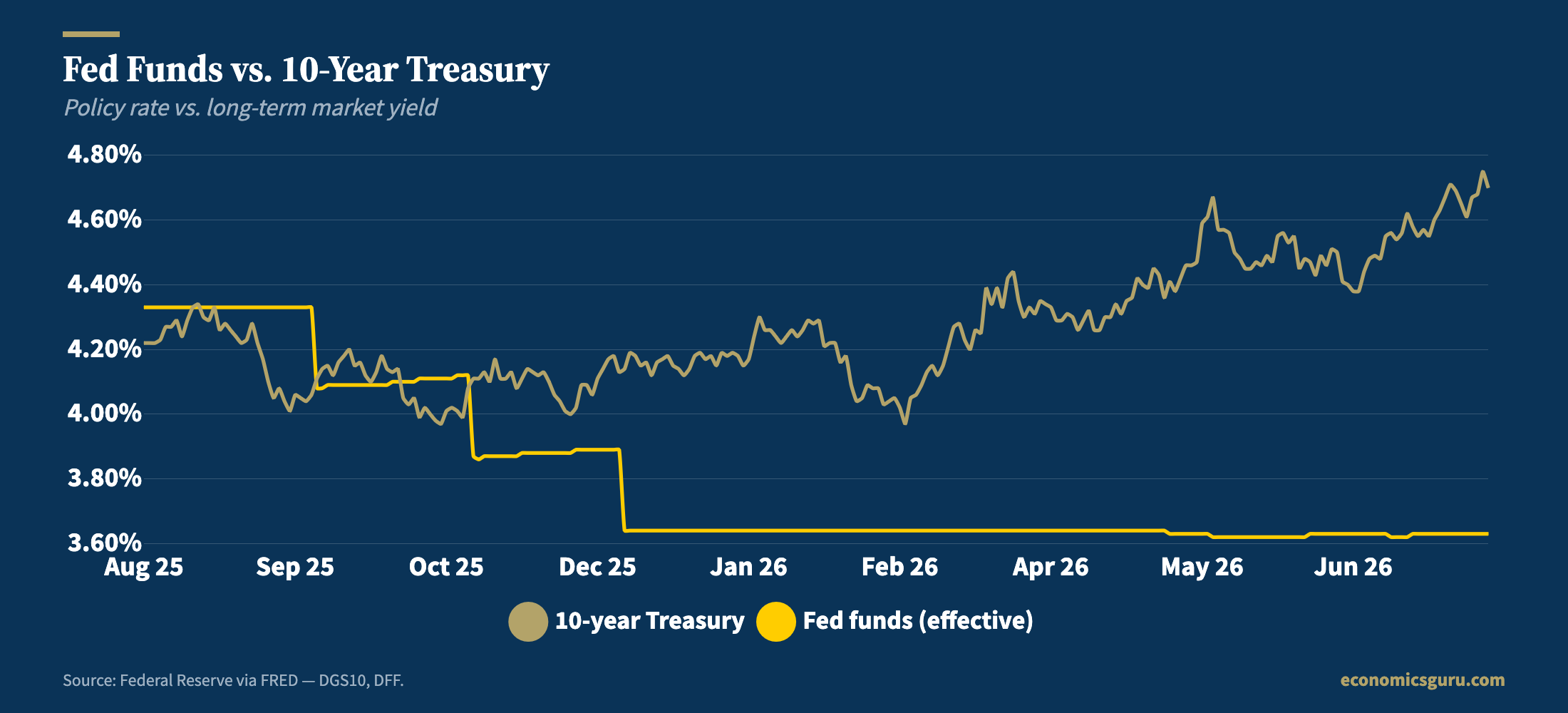
None of this means Warsh isn’t serious about inflation. But it does mean that the market has decided his seriousness is a claim rather than an actual plan, and it is going to charge him for the difference until he shows his stuff. He gets his next chance on September 16th.
Keep reading with a 7-day free trial
Subscribe to Alfie Meek's Weekly Economic Digest and Commentary to keep reading this post and get 7 days of free access to the full post archives.